Best Suit Colors forDark Skin
Dark skin is a suiting advantage most people never fully use. The depth of melanin-rich skin creates natural, built-in contrast with almost any suit colour — which means your flattering range is wider than nearly any other complexion. Yet most suiting advice funnels everyone toward navy and charcoal and calls it done. If you have dark skin, that advice barely scratches the surface of what your colouring can carry. This guide covers every suit shade worth owning, from professional staples to bold choices that only deep complexions can truly pull off.
Discover Your ColorsWhy Deep Skin Tones Unlock More Suit Options
Colour contrast is the invisible engine behind whether a suit looks polished or flat. Lighter complexions often struggle because certain suit colours sit too close in value to their skin — the suit and face merge and nothing pops. Dark skin rarely has this problem. The natural depth of your complexion creates immediate separation from every suit colour except the very darkest, which means more colours genuinely work.
Where it gets interesting is undertone. Dark skin ranges from warm mahogany and golden-brown to cool blue-black and neutral espresso. A warm-undertoned deep complexion looks extraordinary in earth tones — cognac, camel, warm chocolate — because the suit's warmth echoes the skin's warmth. A cool-undertoned deep complexion looks striking in icy jewel tones — sapphire, cool plum, deep teal — because both share a cool temperature. Neutrals like charcoal work on everyone.
The practical takeaway: if you have been sticking to safe navies and greys, you have been leaving your strongest colours on the rack. Dark skin can handle bold saturated shades, high-contrast light suits, and rich earthy tones that other complexion types simply cannot wear as confidently.

Suit Colours That Shine on Dark Skin for Dark Skin
Charcoal and Deep Neutrals
Charcoal is the most universally reliable suit colour for dark skin regardless of undertone. It creates a clean, sophisticated contrast without any colour-temperature risk. The dark-but-not-black depth of charcoal frames the face sharply while allowing your skin tone to be the richest element in the outfit. Anthracite — charcoal with a metallic coolness — adds subtle distinction.
Warm Earth and Brown
Earth tones are the signature suit advantage of dark skin. A camel blazer against a deep brown complexion creates a tonal richness that looks expensive and intentional. Cognac and warm chocolate generate the same effect with more formality. This is not about blending in — it is about creating a warm, cohesive palette where every element reinforces the next. No other skin depth carries brown suiting this well.
Bold Jewel Tones
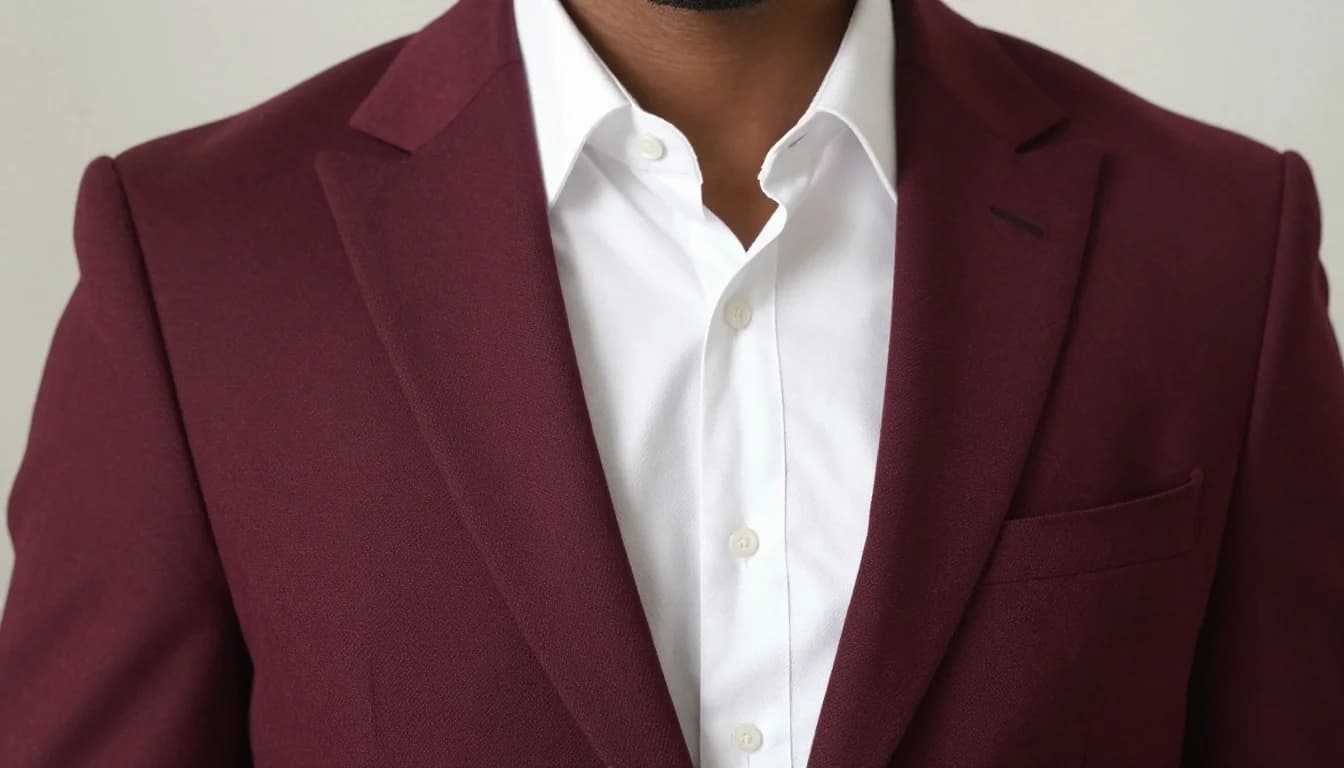
Saturated jewel tones that overwhelm lighter complexions look commanding on dark skin. Burgundy suiting creates a formal richness that reads as red-carpet ready. Deep teal and sapphire offer bold alternatives to navy that stand out in a professional context. Rich emerald is the most daring — and one of the most striking combinations in all of suiting when paired with dark skin.
High-Contrast Lights
Light suits are where dark skin creates the most dramatic visual impact. A cream or ivory suit against deep skin is pure, clean, high-contrast elegance. This combination is virtually impossible for fair-skinned people to pull off with the same impact. Cream linen for summer events, ivory tropical wool for destination weddings — these are power moves that only deep complexions can make.
Ready to Find Your Best Colors?
Get Your Color AnalysisHow to Build a Suit Wardrobe for Dark Skin
The three-suit foundation
Start with charcoal — it covers every formal scenario and flatters all dark skin undertones. Add midnight navy as your second suit for variety. Your third should reflect your undertone: warm-toned? Go camel or cognac. Cool-toned? Go deep teal or sapphire. This three-piece wardrobe gives you professional coverage plus a personal-strength colour that showcases what your complexion does best.
Shirt contrast strategy
The three-tone rule is your guide: dark skin, mid-tone suit, light shirt. This layered contrast is what makes suiting look sharp. White and pale blue create the cleanest effect with charcoal or navy. Ivory and cream work beautifully under earth-toned suits because they maintain warmth throughout. Avoid very dark shirts under dark suits — you lose the tonal separation that makes the outfit work.
Embracing bold colours
Your complexion handles saturated colour better than almost anyone else in the room. A burgundy suit to a winter gala, an emerald blazer to a cocktail event, a rich plum two-piece to a creative meeting — these are not risky choices for you. They are strong choices that leverage the natural contrast dark skin provides. Start with one bold piece and build confidence from there.
Summer and light suiting
Cream and ivory linen or tropical wool are your warm-weather power suits. The high contrast between a very light suit and dark skin is clean, dramatic, and effortlessly elegant. Stone and warm sand offer a softer version of the same effect. Pair with brown leather accessories (cognac belt, walnut shoes) to keep the look cohesive and grounded.
Suit Colours That Underperform on Dark Skin
Mid-tone grey
Heather grey and medium grey sit in a flat zone — not deep enough to create structure, not light enough to create contrast. Against dark skin they look unfinished and dull. Charcoal or dove grey are both stronger: one adds depth, the other adds contrast. Mid-tone grey adds nothing.
Neon and electric brights
Electric blue, bright lime, and neon shades are not about subtlety and they compete with the natural richness of dark skin rather than complementing it. The result looks costumey rather than sophisticated. Deep, saturated versions of the same colour family — midnight navy instead of electric blue, forest green instead of lime — deliver impact without the clash.
Very dark suits in low light
A pure black suit or a very dark navy in dim evening lighting can merge with dark skin, collapsing the visual separation between face and suit. This is not about avoiding dark colours — it is about styling them with lighter shirts and accessories to maintain visible structure. Charcoal provides the same formality as black with more contrast.
Stop Guessing, Start Wearing Your Colors
Discover Your PaletteSuit Colour Upgrades for Dark Skin
Replacing safe defaults with choices that make the most of your natural depth.
Medium grey is the weakest neutral for dark skin. Charcoal creates defined structure and authority that mid-grey cannot deliver.
Black alone can merge with dark skin in dim lighting. Charcoal or dark navy provides the same formality with more visible definition.
Light grey is underwhelming on dark skin. Cream and ivory generate the high-contrast impact that only deep complexions can achieve — use that advantage.
Bright blue competes with dark skin. Deep sapphire and teal have enough depth to complement your complexion rather than fighting it.
Pale khaki can look washed out and default. Camel and cognac look deliberately chosen and create the tonal warmth that dark skin amplifies beautifully.
Navy is safe but expected. Burgundy and emerald on dark skin look confident and striking — these are colours your complexion was made to wear.
Which Season Defines Your Deep Palette?
Dark skin spans several colour seasons depending on whether your undertone runs warm, cool, or neutral. Your season determines the precise end of the suit spectrum where you look most vivid.
Deep Autumn
Learn moreWarm-undertoned dark skin with golden, reddish, or mahogany tones. Your suit palette leans warm and earthy: camel, cognac, warm chocolate, deep olive. You carry warm neutrals with exceptional richness and look most alive in earth tones.
Deep Winter
Learn moreCool or neutral-cool dark skin with blue-black or espresso depth. Your suit palette is high-contrast and cool: charcoal, midnight navy, deep plum, icy jewel tones. Bold, saturated colours with a cool base are your strength.
Warm Autumn
Learn moreMedium-to-deep dark skin with distinctly golden warmth. Your suits should echo that warmth: warm tan, rich brown, golden camel. Pair with ivory shirts and gold accessories for a seamlessly warm palette.
Find Your Perfect Suit Palette
Dark skin gives you the widest flattering range in suiting — but your specific undertone and contrast level determine which end of that range will look most extraordinary on you. A personalised colour analysis identifies exactly where you sit on the warm-cool spectrum and maps the precise suit colours, shirt combinations, and accessory tones that make your complexion look its absolute best.
Get Your Color AnalysisFrequently Asked Questions About Dark Skin
What is the best suit colour for dark skin?
Charcoal is the most versatile suit colour for dark skin — it creates clean contrast and works across all undertones and settings. Midnight navy is a close second. Beyond those staples, dark skin uniquely excels in earth tones (camel, cognac, chocolate) and bold jewel tones (burgundy, teal, emerald). Your flattering range is wider than most complexions.
Can dark skin wear a white or cream suit?
Absolutely — and you can wear it better than almost anyone. The high contrast between a cream or white suit and dark skin is one of the most striking combinations in suiting. Cream linen for summer events and ivory tropical wool for destination occasions are powerful choices that create maximum visual impact.
Should dark skin avoid black suits?
Not avoid entirely, but style them carefully. In dim evening light, a black suit can merge with dark skin and reduce visible definition. Pair a black suit with a crisp white shirt to maintain contrast. For most occasions, charcoal gives you the same authority as black while keeping more visible structure between your suit and complexion.
What colour shirt works best with a navy suit on dark skin?
White is the strongest choice — it creates a sharp three-tone contrast (dark skin, navy suit, white shirt) that looks polished in any context. Pale blue adds softness while maintaining the contrast. Light pink works well too. Avoid very dark shirts under dark suits, which collapse the tonal layers that make the outfit look structured.
Do earth tones really look better on dark skin than other complexions?
Yes — this is one of the genuine colour-analysis advantages of dark skin. Warm browns, camel, and cognac create a tonal harmony with deep warm complexions that looks rich and cohesive. On lighter skin these same colours can look flat or muddy. If you have warm undertones especially, earth-toned suits are your distinctive strength.
What accessories work best with suits on dark skin?
Both gold and silver work well on dark skin depending on your undertone. Warm undertones pair naturally with gold jewellery and warm brown leather. Cool undertones look sharp with silver and black leather. For ties, rich saturated colours (burgundy, deep teal, warm orange) add personality. White pocket squares create a bright focal point that leverages the natural contrast of dark skin.